8 Ways to Apologise in Japanese for Every Situation
Translated from the Vietnamese original. View the original.
8 ways to apologise in Japanese for every situation
Unlike in Vietnam, Japanese people take apologies very seriously and use them in many different situations. Always accepting the blame first and only then looking into the details of the problem is a distinctive part of Japanese culture. So let's look at 8 Japanese ways to apologise!
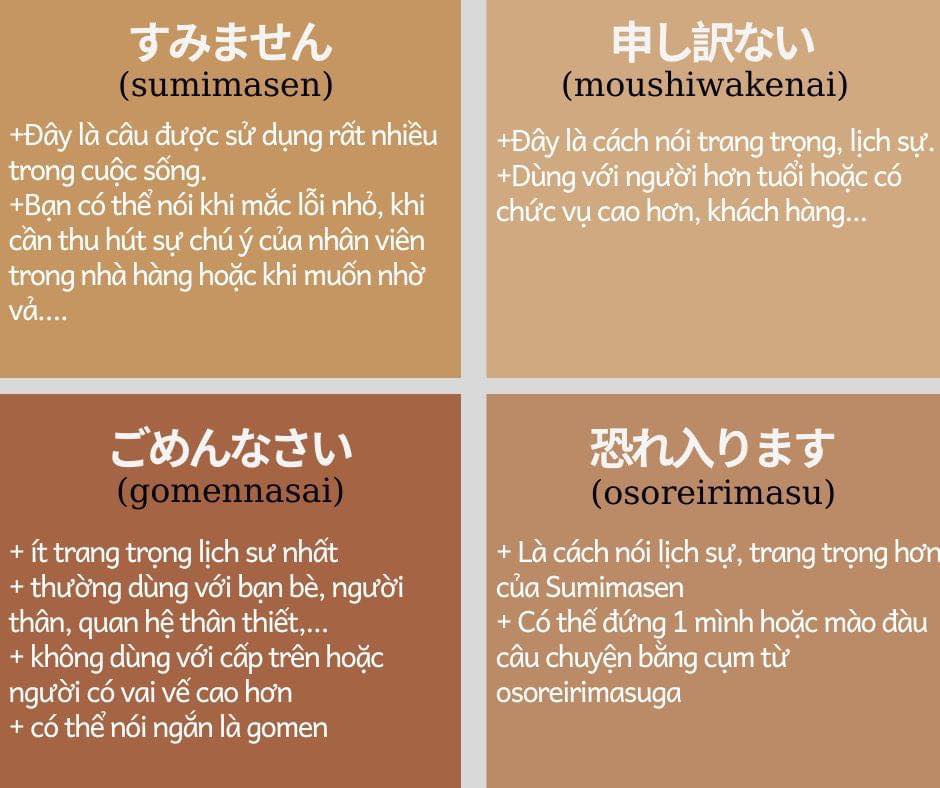
1. すみません Sumimasen
Context: This word is used as a light apology
Example: when you bump into someone on the bus)
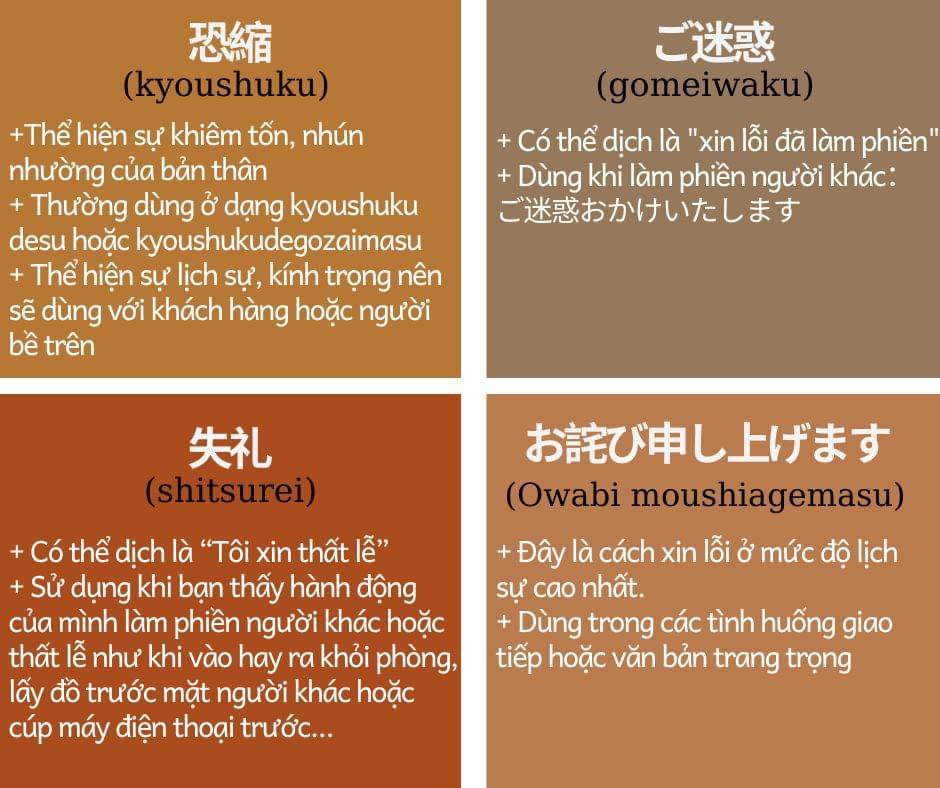
2. 失礼(しつれい) Shitsurei
Context: It can be understood as “Sorry for being rude”. This is also a light, informal apology.
Example: If you need to reach for something on the dining table, say 失礼
3. 失礼しました Shitsureishimashita
Context: 失礼しました。 is a formal past form of 失礼. In Japanese, words said in the past tense feel more formal.
Example: If you accidentally spill water on a table in public, you can use 失礼しました (meaning “I was rude”)
4. ごめん Gomen (full form: ごめんなさい)
Context: This means “please forgive me”. Only use it with close friends and family
Example: You're meeting a close friend but arrive 5 minutes late; say: ごめん
5. ごめんなさい Gomenasai
Context: Only use it with people you are close to. Avoid using ごめんなさい with your superiors. You can use it when your boyfriend or girlfriend is angry with you.
6. すみませんでしたSumimasen deshita
This is the past tense of すみません. Use it to apologise to a superior when you're caught sleeping or doing something personal during working hours
7. 申し訳ございませんでした Moushiwake gozaimasen deshita
Context: This is a formal, polite apology. Use it if you have done something very bad. It can be used when a company president announces a defective product.
See also:
Japanese for Convenience Stores
Experiences of Living and Working in Japan