6 Secrets of Japanese Business Success
Translated from the Vietnamese original. View the original.
6 secrets of Japanese business success
The Japanese are famous worldwide for a distinctive and effective way of working. Their culture holds mysteries that few outsiders can fully understand. The Japanese are also rigidly formal in business dealings. Working with foreigners, they are especially strict and always on their guard. But notice that behind that work there are very relaxed, friendly Japanese smiles. That in itself is one of the customs and courtesies of Japanese culture and tradition. And might that not also be one of the foundations of Japanese success? Below are 6 things you could call the "secrets" you can learn from Japanese business culture.
① RESPECT YOUR OWN BUSINESS CARD
A Japanese meeting always begins with a highly formal exchange of business cards. The ritual is called "meishi kokan". On receiving a card, the businessperson takes it with both hands, reads it very carefully, reads the information printed on it out loud, and then puts it in a dedicated card case or places it on the table right in front of them, using it during the conversation as needed. A businessperson never simply puts the card away in a pocket. That is considered disrespectful.
What can you learn? Exchanging cards is a way of showing how much the business dealing matters. It shows us the value of the meeting, and you will also reap its value in the future.
How should you adapt? In North America you would look silly, and might even be laughed at, if you performed the whole ritual. Even so, when you receive a card you are receiving a lot of important information from it. You won't feel it is unnecessary if you remember that the name of a contact is genuinely valuable. You will be seen as rude and disrespectful if you "toss" their card straight into your pocket and snap it shut.
② LEARN FROM THOSE WHO CAME BEFORE YOU
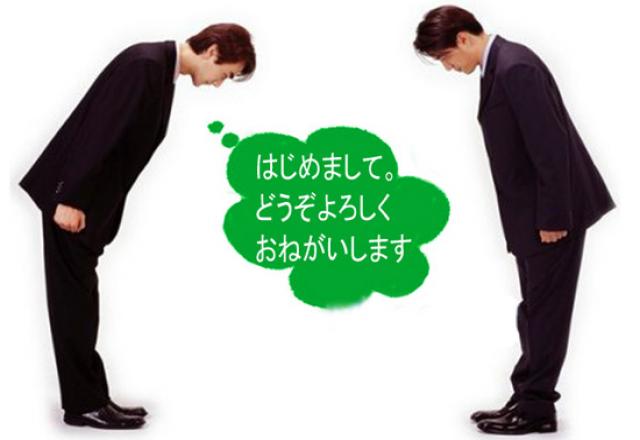
In Japanese meetings, people take their opinion directly to the most senior person to explain their proposal, not in order to attract the boss's attention to themselves. When bowing, Japanese etiquette says that the older and more senior the person, the lower you must bow.
What can you learn? Japanese business culture always values those who came before, for the understanding, the experience and the valuable know-how they give the company. Even if you are on the same rung of the career ladder, people older than you are still more important than you.
How should you adapt? Learn from those who came before you, or from those above you in the same group or workplace. If you are unhappy with your manager, raise it frankly with them in private, and never challenge their authority in front of a crowd. Understanding helps people climb to higher rungs through the skills and experience they accumulate.
③ LIFT MORALE WITH SLOGANS
Many Japanese firms start the working day with a morning gathering to raise enthusiasm for work, where employees usually line up and chant the company slogan together. It is a way of inspiring enthusiasm, creating motivation and building loyalty at work. It also helps keep the company's goals firmly in everyone's mind.
What can you learn? On the surface this ritual may look like religious preaching, but for the Japanese it is a way of encouraging the spirit of the work. A daily morning gathering stands in for a reminder of the company's long-term strategy and goals — words that could seem vague if each individual were simply reminded of them as a daily obligation.
How should you adapt? Remind yourself every time you sit down what the goal of your work is. Set yourself a long-term goal in your mind and recognise what a team working together needs to achieve. Write out slogans by hand yourself and use them when you feel discouraged or unsure of yourself.
④ A SERIOUS FACE
Except on occasions that let the Japanese laugh freely, Japanese employees usually do not show amusement on their faces; instead they keep a serious expression. In meetings especially, they speak quietly, in very measured voices, and often close their eyes when listening closely to the speaker. To foreigners this habit looks like a sign of displeasure.
What can you learn? Most Japanese people keep a kind of reverence even in the workplace. Humour is rarely used, apart from jokes during breaks. Physical contact between colleagues is very rare.
How should you adapt? To us, such a formal workplace can seem uncomfortable and stifling. You don't want to turn your workplace into sacred ground, but there is no reason to turn it into a house for friends either. Professionalism and personal conduct increase respect for the work, and with it productivity in the business.
⑤ WORK HARD, PLAY HARD
After tense, exhausting days at work, Japanese businesspeople are ready to "let off steam" at the bars after hours. If your workplace is very rigid or formal, Japanese businesspeople will drop in to shed the strictness they bring from the office. A favourite pastime is the karaoke bar, where people can sing to their hearts' content until midnight, even until their voices give out. Besides places of entertainment that balance out work, dance clubs and night spots are also where partners and colleagues share information and seal deals to strengthen their ties.
What can you learn? It matters not to let work dominate too much of your life. Free time is an important part of your day. It helps you release tension, and it is the quiet time in which you drive away your worries.
How should you adapt? Forget work for a short while, even just a moment, even when you are with colleagues. Enjoy the happy hours and join in the company parties. Socialising with friends outside the company and taking part in social activities will help you become more natural and less stiff.
⑥ RELATIONSHIPS COME FIRST
Socialising matters a great deal to the Japanese; it is usually the first thing addressed in any new relationship. A common trait of Japanese businesspeople is a high adaptability in negotiations. Their presentation skills in particular are very good, so they easily win a partner's goodwill and their success rate in winning contracts is high. Getting to know and building ties with influential, high-standing people is something the Japanese pay great attention to in order to create new business opportunities.
What can you learn? Delivering a weighty presentation will bring you credibility and a high chance of success. The Japanese feel it is their duty to be loyal to the contracts they have signed, and even after signing they continue to respect their partner.
How should you adapt? We often call it name-dropping when someone claims to know famous figures, and it isn't seen as an admirable habit. You don't want to be called a braggart, but in reality it matters when we are inside an organisation. Build bridges everywhere and you raise your own value. Spend a day mentioning only successes and you will soon reach your career dream.
Every different culture reveals to us its own things, its own secrets of success that grew naturally in its own soil. Just as the taste of an unfamiliar food brings a sense of delight, the elements of working life abroad that you gather widen and enrich your outlook. Applying the Japanese secrets will make you stand out at your workplace.
See also:
A Guide to School Life in Japan
Japanese Sentences Commonly Used in Daily Life