N5 Grammar: Telling ~から and ~ので Apart
Translated from the Vietnamese original. View the original.
N5 Grammar: Telling the patterns ~から and ~ので apart
TELLING THE GRAMMAR PATTERNS から (KARA) AND ので (NODE) APART IN JAPANESE
COMPARING THE TWO STRUCTURES ~から AND ~ので
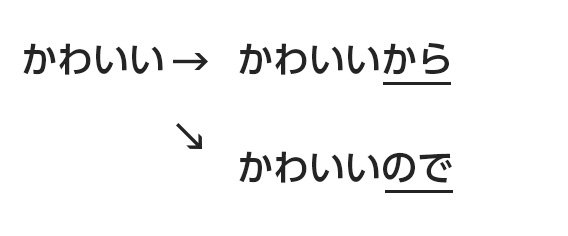
We use both ~から and ~ので to explain a reason. For example, if an adjective such as KAWAII, meaning "cute", is the reason, you can say it both ways: かわいいから or かわいいので。
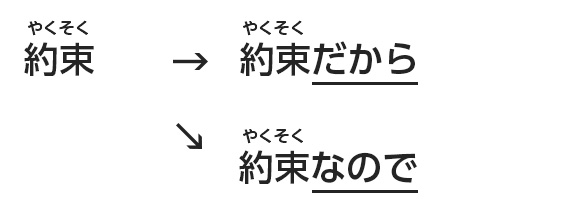
But with ~な adjectives or nouns, ~から becomes だから and ので becomes なので。
For example, やくそく, "a promise", is a noun. To say that やくそく is the reason, with から you say やくそくだから. With ので you say やくそくなので。
から and ので are almost the same. But ので sounds softer, because the N sound in ので is gentler than the K sound in から. So at work and on formal occasions ので is used more often. That is because Japanese people usually want to come across as mild and polite at such times.