What Do You Need to Prepare to Study in Japan?
Translated from the Vietnamese original. View the original.
WHAT TO PREPARE BEFORE STUDYING IN JAPAN
(Written from personal experience, and it will be fairly long)
The new term is coming and there will be another rush of people going over, another rush slipping away and another rush heading back to Vietnam. Online it's all in full swing: ticket prices, handwritten lists of things to pack — fish sauce, salt, instant noodles… and so on and so on…
But what do you actually need to prepare?
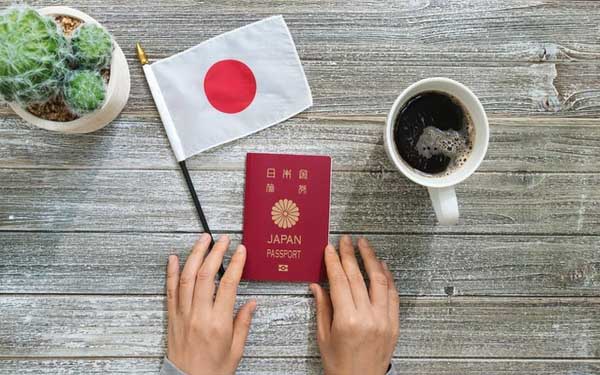
1. Japanese
Don't think you can live comfortably on 1000 words or two volumes of Minna no Nihongo. Wake up a bit: how many words and how much grammar do you need to get through a day in Vietnam?
Plenty of people think “oh, I'll be working somewhere full of Vietnamese, what do I need Japanese for?” All right! Then why go to Japan at all? If you're going as a student just to grind out money, don't bother — ask your sempai how the Immigration Bureau has been clamping down lately 🤗
At the very least, learn both Minna no Nihongo books by heart before you go; arriving deaf and dumb to it all is miserable. It still is!
With the language, even if you run out of money you can find work; without it, if you run out of money all that's left is heavy lifting — though that pays too, doesn't it. Those with good Japanese usually find work with a very high hourly rate and steady hours.
2. Money
There's nothing you can't get over here; Daiso is 40k in Vietnam but only 20k here.
But when you first arrive and can't start work straight away, bring as much as you can — just don't worry to the point of asking: can I buy salt over there? can I buy instant noodles over there?…
Salt is 200 yen (a fifth of an hour's wage) = 40k a packet and lasts half a year.
If your family isn't well off, then bring what you can, but if money is tight you really should learn the language properly so you can start working straight away and have an easier time.
3. Fitness
Imagine: at home you step onto a motorbike and roar off; over here it's at least two long walks a day, never mind running for the train — can you keep your breath?
And once you're here, everyone's hands are calloused and their arms all sinew and muscle, so you can guess what the work is like. So while you're still at home, start exercising and try living on Japanese hours.
4. Self-belief
Believe in yourself first, and spare me lines like: “I'm an old hand over here, just follow me.” Old hand my foot! It's thanks to these “old hands” that the Bureau has tightened up visas. Watch on TV how the Japanese police deal with the tax dodgers; it's only because it's a few tens of man that they don't come to your door 😂 Try a few hundred man and they'd be camped outside it.
After three years in Japan I've realised: if you want a quiet life, behave.
5. Goals
In truth, at an age just out of upper secondary and suddenly off on this “trip”, setting goals is very hard. But at the least you need to work out what has to be done this year and this month. For example:
– Next year I have to pay xx man in fees and xx man to enrol at a senmon school — so how much do I need to save each month?
– If I want to go to this school, what level of Japanese do I need? What level of English?
That sort of thing — because if you mess about and only start borrowing when it's right on top of you, then “we don't belong together, the dream isn't ours”. Right!
And if you do lend, lend little: when you lend you're a king, but when you want it back, sorry, they swear at you and say they won't pay, so what are you going to do :))) So only lend what you can afford to lose. Whether you get it back is down to luck.
6. Other things:
– Clothes: personally I find Vietnamese clothes come in more styles and are cheaper, but Vietnamese winter coats are no match for the Japanese weather. Clothes here come cheap and expensive, so there's no need to bring too much. I brought so many warm clothes that I was over the weight limit, then dumped them and haven't touched them since.
– A suit (or ao dai): they're made and sold here but they're expensive or the measurements don't fit, and having them altered costs more, so it's better to get one at home. You'll use it a lot in Japan: opening ceremonies, closing ceremonies, job-hunting practice, job-hunting,… You'll wear an ao dai plenty too — a photoshoot in an ao dai under the cherry blossom is wonderful. And there are shops selling Vietnamese ao dai here too.
– Shoes and bags: in Japan it's mostly walking and trains, so just wear trainers — one nice pair for going out and a less nice pair for work. Girls can wear whatever sandals they like. Same with bags; remember to bring a rucksack, as they're very handy. It's up to you really. For winter bring waterproof boots with non-slip soles; I bought a pair for 700k and still use them.
– Medicine: if you can live in Vietnam's polluted air, then naturally the clean air here keeps you very well at first. But once you fall ill the first time, oh, it's wretched — Vietnamese medicine is mostly strong doses while Japanese doses are very mild, so you can take Japanese medicine for a week and not get better. And if you don't get better you can't work, and at the end of the month there's nothing to eat.
– Food: my older brother, whose Japanese was poor and who wasn't strong, brought a whole suitcase of instant noodles to get through the first month. There's plenty of Vietnamese food sold here, but for the first month before you have any income it's fine to bring a little. Once in Japan though, it's best to get used to Japanese food; things like garlic and vinegar…and so on can be set aside for now, since you can buy them here cheaply.
Get a block of frozen meat for 700 yen (140k) and braise it with pepper for three meals.
In short, what to bring depends on each person and each family, but bring few odds and ends. Why? Because there's no shortage here, and if you bring too much you'll be gasping carrying it home from the airport. There's no car pulling up at the door and no parents to carry it for you :))) And if you bring a lot and then find it doesn't suit you here, it goes to waste. But points 1-5 are always needed.
Once you're here, what then?
– Register your address and your insurance.
And don't forget to get the stamp permitting part-time work; forget it and applying later is a real chore.
– Get a phone.
Buy something within your means and use a cheap network. Get the latest iPhone to show off and you'll pay a day's wage a month for it.
– Get a Yuucho bank card and put the money you brought straight into it. In shared housing you never know, so better safe than sorry.
…..
It's written online and the school will remind you.
If your Japanese isn't good yet, there are plenty of ready-made phrases online you can use, or if you know someone who has been here a while, ask them to come with you.
One more thing to remember: Google is everything.
– Where do I go to register my address? What do I need to bring?
– How do I find part-time work?
– What do I need for an interview?
– How do I collect a parcel when I was out?
….And so on — Google has it all, IN VIETNAMESE.
There are a few principles to remember:
1. Say thank you and sorry
2. Always try, and always be honest
3. The “spinach” rule, Ho-Ren-So
Hokoku: report
Renraku: contact
Sodan: consult
If you don't look into things beforehand, that's on you.
That's it. Good luck with the rest!
Thank you for reading to the end. This is personal experience, so plenty of it may not suit you.
Source: Trinh Trương
See also:
200 Common Japanese Conversation Sentences
Common Document Templates in Japanese