The Difference Between となり, そば and よこ
Translated from the Vietnamese original. View the original.
The difference between となり, そば and よこ in Japanese
1) 隣 (となり): next to, right beside (immediately adjacent). よこ: also beside, near, but along a straight line
隣 … Next to
→ It can also refer to sides other than left and right.
Examples:
〇・・・○○さんの隣に座る
〇・・・隣の駅に降りる
2) 側 (そば): also beside, near, but covering the surrounding area [think of the area as a circle]. Compare with (ちかく): そば here means near within a small range, while ちかく is a wider range.
側 … Side, beside, near.
→ In a nearby space, without clear distance or order
Examples:
〇・・・○○さんの側に座る
×・・・側の駅に降りる
3) 横 (よこ): Imagine 4 houses A, B, C, D on one straight line, and B is your house => A&C are となり because they're right next to each other, D is よこ.
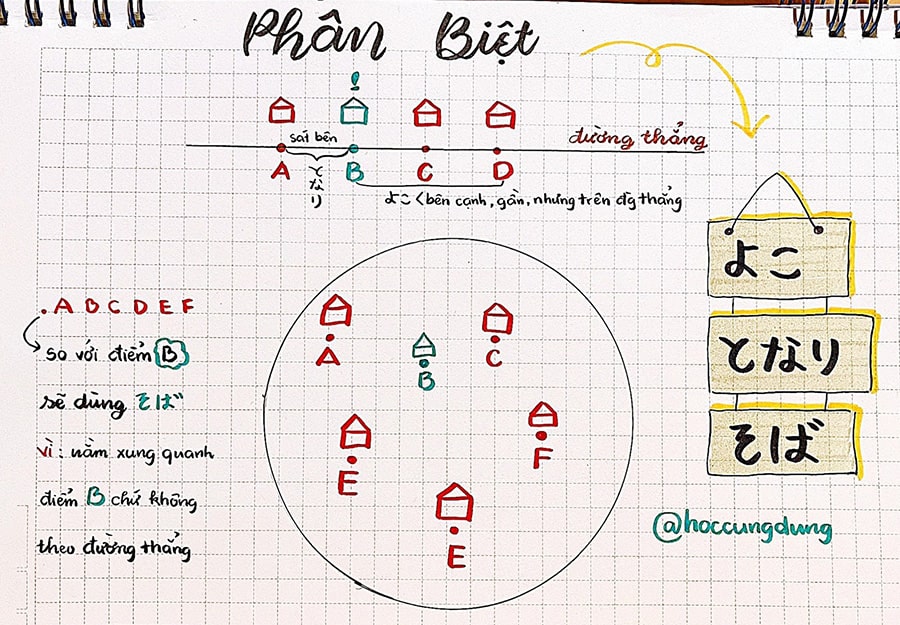
横 … Beside (horizontally)
→ The side represents left and right. Not used for anything other than left and right.
Examples:
〇 ・ ・ ・ ○○さんの横に座る
× ・ ・ ・横の駅に降りる
(Because a station can be in many directions, not just left or right)
As for そば, imagine house B with houses A, C, D, E, F around it, not in a straight line; those houses are そば in relation to B.
See also:
N5 Grammar: The Difference Between ~から and ~ので
Grammar Comparison: ていく and てくる