Important Things to Know About Living in Japan
Translated from the Vietnamese original. View the original.
Important things to know when you are in Japan
1. Health :
Without your health you can do nothing. Falling ill abroad is especially hard, because you are on your own.
Technical interns all have insurance (apart from a few things such as dental work…etc.). So if you are ill you should go to hospital.
Vietnamese people tend to dread the very word hospital. But once you are in Japan you will see that going to hospital is an entirely ordinary thing to do.
So do go and get yourself seen. Some people have never been to a hospital in decades. This is a good chance to have your health checked. If you have insurance, you get 100% of the money back once you have been seen and taken the receipt away with you.
Your body needs at least a year to get used to the Japanese weather (spring, summer, autumn, winter). So take special care of your health in your first year in Japan, before you are used to the climate.
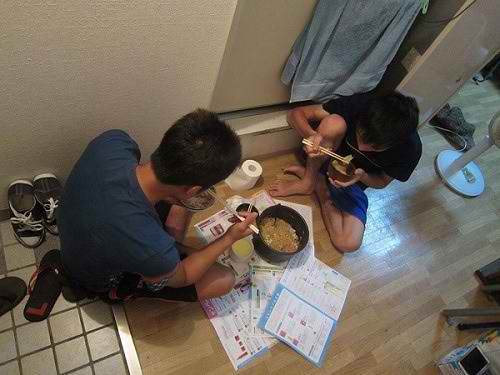
Don't stay up late, don't drink heavily, don't squander your health. Life in Japan can be lonely, and of course you need moments to relax and to eat with friends. But do not let yourself go: eating and drinking to excess brings all sorts of unpleasant consequences! (Always remember you are abroad. You are on your own, and so are your friends. They cannot take time off work to look after you and you cannot take time off to look after them. So you need to hold back from heavy eating and drinking.
Some people doing hard physical work need tonics. Japanese people take them too, to stand the pressure and pace of the work.
Ask a Japanese person; they will know which are best, and buy them at a large Japanese pharmacy. Buying online carries a high risk of counterfeits. You lose your money and gain an illness.
Eat a full, balanced diet. Many people eat out of habit (instant noodles…for ever), and Vietnamese instant noodles at that. You need to balance it by eating vegetables and meat…Always remember that you need your health in order to work and earn.
2. Safety:
This matters most of all. You came to Japan to work, not to have an accident or lose your life. So understand this and pay attention to it.
There have been many cases of Vietnamese people drowning while swimming in the sea (especially in summer). You do not live on that coast, so you do not understand how dangerous it is when the tide turns, how changeable the Japanese weather is, or that those waters have whirlpools…etc. So take the greatest possible care. Remember that your life matters not only to you but as the hope of your family. Enjoy yourself, but be safe about it.
There have been many cases of horseplay at work causing accidents and even deaths. I know of at least 2 deaths myself.
1) A young Vietnamese woman and a Chinese man worked at the same dyeing company. Somehow, larking about, the Chinese man hid somewhere, suffocated and died.
2) Two brothers came to Japan as trainees at two different companies. After nearly 3 months the elder was crushed to death by a machine. The younger was so distressed that he asked to go home…
Workplace accidents are a wound that never heals. Especially for us Vietnamese, who tend to be careless and to take things for granted. So take the greatest care and follow your company's rules and regulations to the letter.
Another thing that matters a great deal is road accidents. “Better a second late than dead”. You mostly walk and cycle, so you cannot judge how fast a car is going. And the careless habit of darting across whenever the road looks empty has consequences. Remember that one second is all it takes for your life to close for good. And if you break the traffic laws, not only will you receive no compensation, you may even be sued.
So follow the rules strictly. You must stop on a red light; only go on green.
3. Obeying the law and the rules:
Japan is safe because its laws are strictly enforced, and companies run normally and grow because they have rules. We need to follow them – especially as foreigners, since Japanese people judge us rather more harshly than they judge a Japanese person doing the same thing. And there is no point asking why a Japanese person can do it and you cannot?! (Because their position is different from yours: they work part-time and can take a day off whenever they like..etc., while you stand there for the whole of Vietnam. If anything goes wrong, Japanese people start muttering about Vietnamese people.)
None of this means you should simply put up with everything. It only means following the company's rules so that Japanese colleagues have nothing to say and nothing to hold against you. Because they will go on about it for ever.
4. Relationships:
You will have relationships with colleagues (both Japanese and Vietnamese)
With Vietnamese friends you work alongside in particular, you need the sense to keep some distance. Remember that if the two of you get on it is a delight, but if you fall out it is hell. So manage things so that it never comes to disliking each other. “Nine people, ten opinions”, so be tactful, respect one another and keep a sensible distance in everything.
Relationships with Japanese people are mostly at work. So the first thing to keep in mind is to work hard and follow the company's rules. Japanese people are like anyone else (some warm, some not). What matters is patience and self-restraint. Remember that everything has a solution and only we ourselves can find it. Our coming to Japan to work is like someone from Africa coming to Vietnam and working alongside us. Customs differ, so of course problems arise (prejudice, or something a senpai did before you that turned them against you..etc. In short there are many reasons…including reasons that lie with that particular Japanese person).
Try to learn their habits and their character, be shrewd, put up with a little hardship, hold your tongue a little, know how to flatter a little…and sooner or later they are bound to change. That much is certain.
Living in Japan, you should learn to lean on Japanese people rather than carry resentment, which does you no good whatsoever. Japanese people are all the same in this: once you have made them understand and become a companion to them, you will find they help you a great deal in life and at work too. They will even be gentle about your mistakes and let them go.
It isn't easy, but it isn't impossible either. What matters is whether you are determined. Determined to study, determined to work, determined to build good relationships…all of that gives you something to take away, a gift beyond the money you wore yourself out earning in Japan. Because that, in truth, is all it is: a particular sum of money, and not a large one.
The most precious things are the Japanese language (if you manage to learn it), good relationships and memories. Memories above all, because they never come back. So let them be good memories rather than bitterness and hatred towards Japanese people and Japan.
Remember that there are 130 million Japanese people. The Japanese people you resent are only a handful of them. And Japan itself is the country that is giving you a life, work and a living.
If you really have backbone, don't rail against it. Part with Japan openly, buy a plane ticket and go home. Your family will always welcome you back in Vietnam.
—
Source: Pham Quyen fb.com/quyenjp
See also:
A Few Words for Technical Interns in Japan
Advice for Anyone Hoping to Go to Japan (as a Technical Intern)