Advice on Working in Japan
Translated from the Vietnamese original. View the original.
Advice on working in Japan
Work :
Without a job you cannot stay in Japan. That much is certain.
Even if you come to Japan on a spouse visa, work is still among the most important things.
In the past, for instance, when a Japanese person went abroad and married, on returning to Japan they had to prove they had a job and a steady income before they could sponsor their partner. Japan seems to have dropped that rule now. Otherwise you have to hire a lawyer and spend a good deal of money.
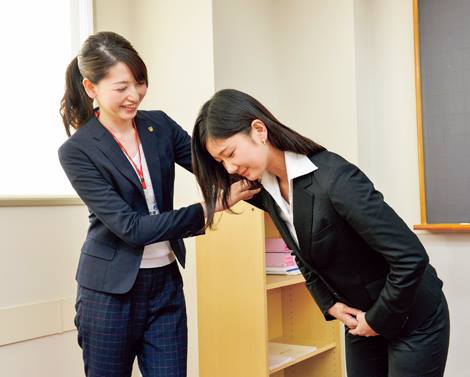
Apart from family firms, companies in Japan almost all have a hierarchy and their own way of working. To fit in easily, remember these rules:
1. Don't be a know-it-all (even if you really do know the subject well); when you join a company, first listen and work as your superior instructs.
Often it seems unreasonable, but don't argue back — they will only dislike you more. Just do it their way.
I don't know what your company is like, but usually when a superior in Japan has told you to do something, they will not blame you if it goes wrong. (Unless they are deliberately setting you up with their own superior or the director so that person dislikes you)
2. Working on site, in a factory and so on, you will certainly come across 5S, and in the food industry even 7S. (There is plenty of material on it, so I won't go into detail — ask Google)
At work, Japanese people have the “spinach” rule (ホウレンソウ). It is only an easy way to remember it; it is really 報連相(ほうれんそう):報告(ほうこく: report)(連絡:れんらく: contact) and (相談:そうだん: consult…)
3. Be even-tempered and tolerant
Plenty of people will disagree with this. But as I have said before, we come to Japan to earn money and we don't have much time, so we shouldn't be picking fights, bearing grudges, arguing or swearing… Just look around at how people behave all over Japan. However talented or well known a director may be, if he lacks composure and calm and behaves coarsely, he has almost no standing; the Japanese will certainly look down on him, even if they don't say so. That is why you rarely see Japanese people swearing or raising their voices in public.
Don't judge by the small fry. Look at Japan's great figures — Mr Inamori Kazuo (KDDI), Mr Masayoshi Son (SoftBank), Mr Hiroshi Mikitani (Rakuten)… You will find them extremely composed and correct, softly spoken, never arrogant or shouting….
Even if the Japanese people you deal with are rude, coarse and ill-mannered…, you shouldn't be dragged into retaliating, tit for tat. It does no good at all and only shows you are on the same level as they are. Behave calmly, tolerantly, tactfully and intelligently. It isn't only the famous directors I mentioned who can show you this — even the Japanese woman doing a cleaning job part-time can (if you don't believe me, watch and see whether it's true!)
4. Don't be timid, be eager to learn…
Japanese people, once they set out to teach you something, will teach it thoroughly. So don't hesitate — ask about everything. Of course you have to hold back rather than chatter away while working. Because at work you have to follow the company rules and not disturb other people.
5. Work — don't just go through the motions!
作業(さぎょう)をしないで、仕事(しごと)をしてください。
What is the difference between working and going through the motions?
仕事(しごと)と作業(さぎょう)の違(ちが)い は 何でしょうか。
Working means using your head, knowing how to plan and what to prioritise to get the best result. Going through the motions takes no thought at all. You just do it!
—
Saying this, someone will surely tell me: “My job is nothing but going through the motions!”
Well, then you are in the best possible place to learn, because your job is fairly undemanding. Think about what your future holds. You are in Japan — how is your Japanese? Is there anything in the job that could be improved? Can you learn to plan the way Japanese people do? Do you know many technical terms in your work?…etc.
My company makes souzai (ready-prepared food). I always tell my students that the routine work is only that. You have to think for yourselves about your own future. At work, learn and try to become a manager — managing materials, managing prices, managing the quality of what you make. And learn and practise cooking well. If you can cook well, you have a trade that will never let you go hungry. But you have to learn: learn how to manage, how to watch customers (what time do most come in? who are they (what age…), which dishes do they buy most…etc.
And learn Japanese. Japanese is extremely hard. But it is the magic wand that lets you explore a Japan that is enormously complex, full of mystery and difficult.
Five words, two grammar patterns and three kanji a day. Steadily, without missing a day, continuously and persistently.
Why every day? Because you forget! You learn one thing and forget the last. So only by keeping at it have you any hope of taking it in.
Is it all right not to study? It's fine. But you won't understand anything about Japan. You will only see the surface, only what is in front of you. As I said, Japan is an old country, and you will understand nothing of what is deep in it or what it really means.
And not only you — there are many Japanese people who don't understand it either. So they don't study; they find it too complicated. Their capacity has its limits.
You can study or not study. But my advice is that you should. Even studying, you still won't fully understand Japan!
—
P.T.Q
Thanks to Pham Quyen for sharing. fb.com/quyenjp