The 10 Most Common ~ない Negative Japanese Grammar Points in the JLPT
Translated from the Vietnamese original. View the original.
The 10 most common ~ない negative Japanese grammar points in the JLPT
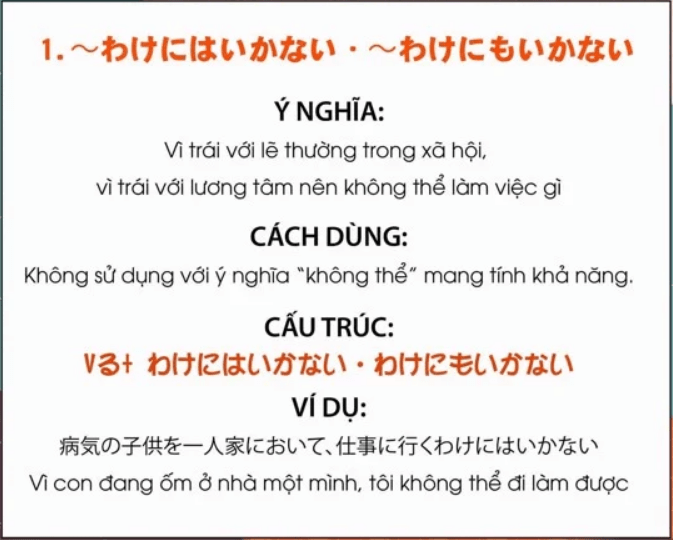
1. 〜わけにはいかない / 〜わけにもいかない
Meaning: because it goes against what society considers normal, or against your conscience, you cannot do something
Usage: not used in the sense of "cannot" as in ability.
Structure: Vる + わけにはいかない / わけにもいかない
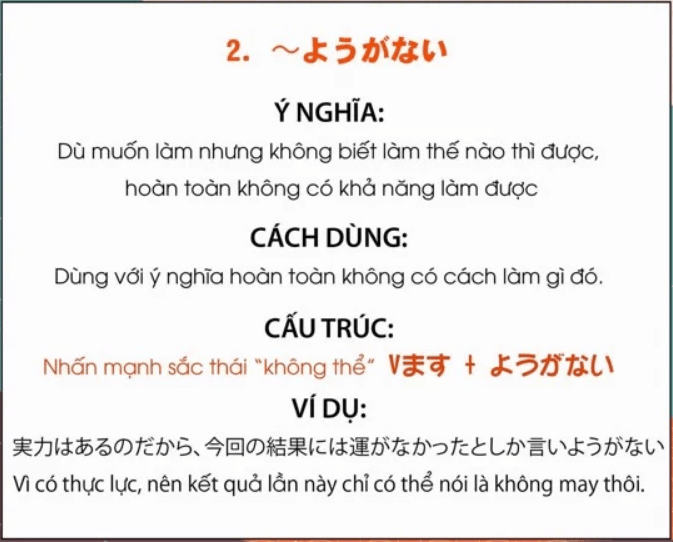
2. 〜ようがない
Meaning: you want to do it but have no idea how; there is absolutely no way of doing it
Usage:
Used with the meaning that there is absolutely no way of doing something. It emphasises the nuance of "impossible"
Structure: Vます + ようがない
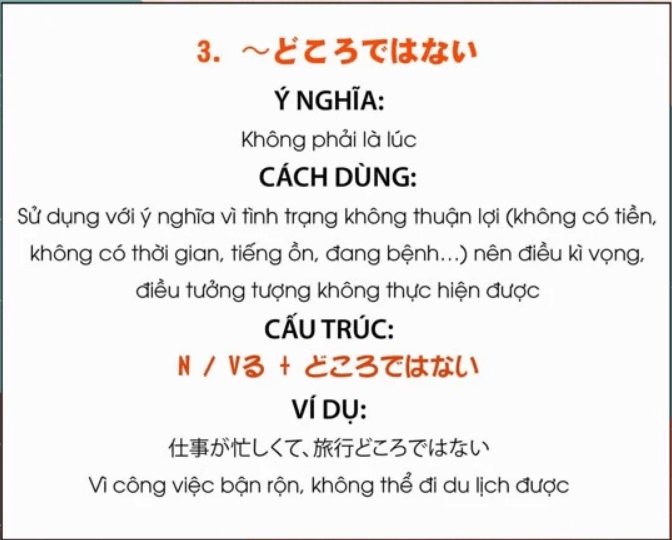
3. 〜どころではない
Meaning: this is not the time for it
Usage:
Used with the meaning that because circumstances are unfavourable (no money, no time, noise, being ill…) what was hoped for or imagined cannot happen.
Structure: N / Vる + どころではない
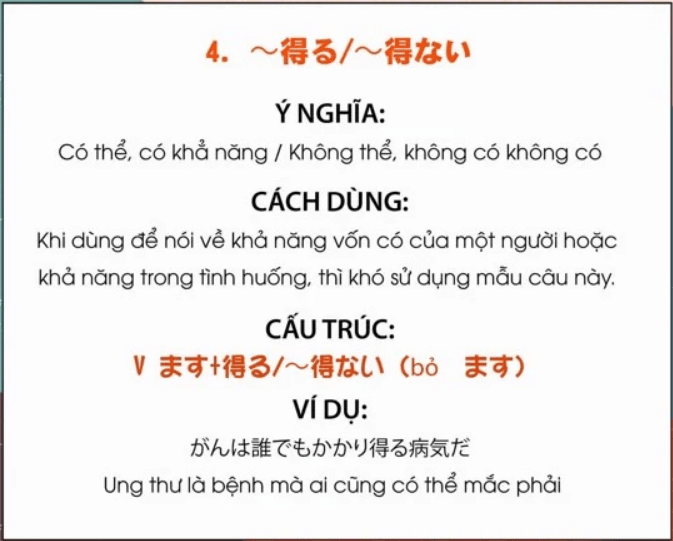
4. 〜得る/〜得ない
Meaning: possible, there is a possibility / impossible, there is none
Usage: when talking about a person's inherent ability (e.g.: can speak English) or an ability in a given situation (e.g.: doesn't drink, so can drive), this pattern is hard to use.
The verb 得る has two readings, える and うる; with this usage it is usually read うる, and the negative is えない. The pattern is not used to talk about your own ability.
Structure: V ます + 得る/ 〜得ない (drop ます)
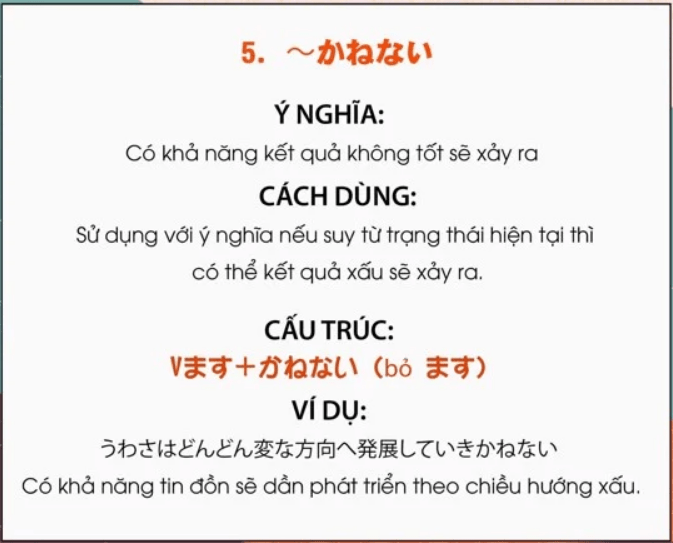
5. 〜かねない
Meaning: there is a possibility that a bad outcome will occur
Usage:
Used with the meaning that, judging from the present state, a bad outcome may occur. This pattern states the cause more clearly
Structure: Vます+かねない (drop ます)
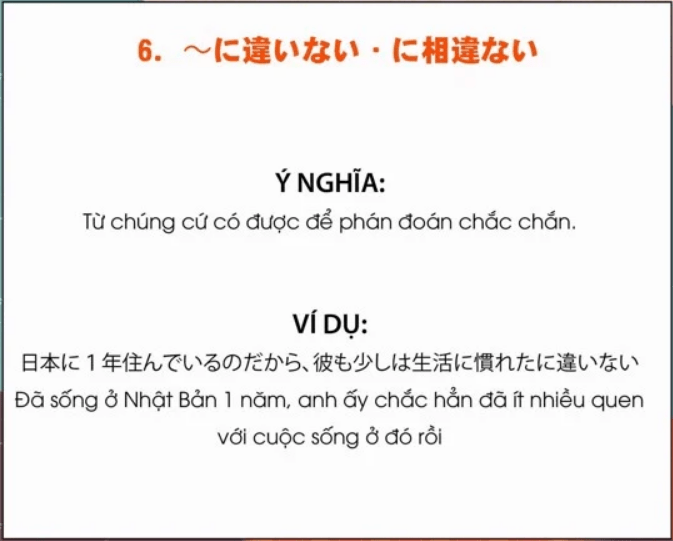
6. 〜に違いない / に相違ない
Meaning: judging with certainty from the evidence.
に相違ない is a stiffer way of saying に違いない
Usage:
It stands at the end of the sentence, with what is being judged immediately before it.
In some cases the plain form + から can come immediately before it
Structure: Plain form + に違いない / に相違ない
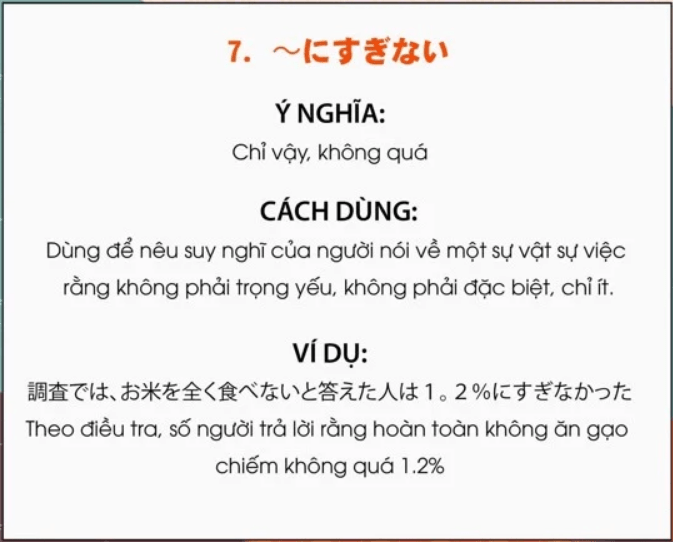
7. 〜にすぎない
Meaning: no more than, merely
Usage:
Used to state the speaker's view that something is not important, not special, only a small matter. N・
Structure: Plain form + にすぎない
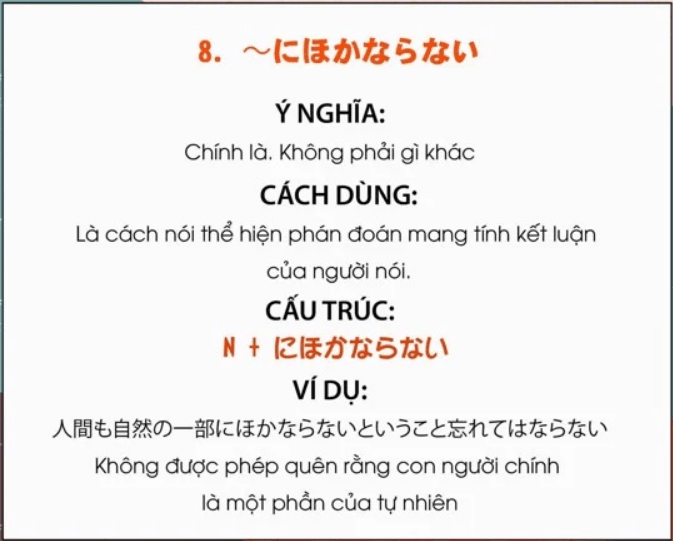
8. 〜にほかならない
Meaning: it is precisely this. Nothing else
Usage: a way of expressing the speaker's conclusive judgement.
Structure: N + にほかならない
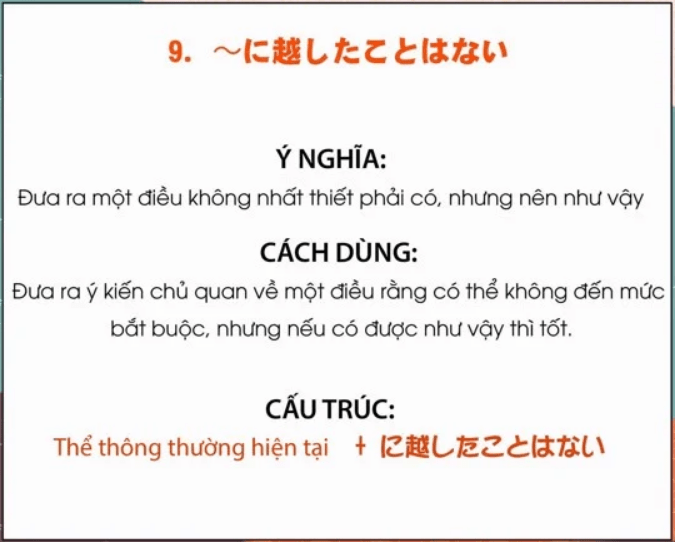
9. 〜に越したことはない
Meaning: putting forward something that isn't strictly necessary but would be better that way
Usage:
Giving a subjective opinion that something may not be compulsory, but it would be good if it were so.
Structure: Present plain form + に越したことはない
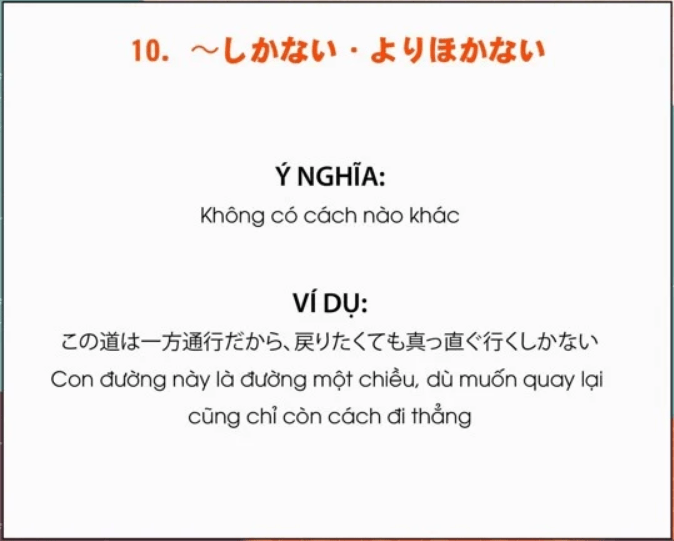
10. 〜しかない / よりほかない
Meaning: there is no other way
Usage: expresses the speaker's feeling that there is no other choice and something simply has to be done. It is also sometimes used in a positive sense.
Structure: Vる + しかない / よりほかない
See also:
20 Basic Verbs That Take the Particle に
15 Ways to Use the て (te) Form in Japanese