How the Sentence-Final Particles Are Used in Japanese
Translated from the Vietnamese original. View the original.
How the sentence-final particles are used in Japanese
Here are the particles most used at the end of a sentence in Japanese.
How all the sentence-final particles are used in Japanese
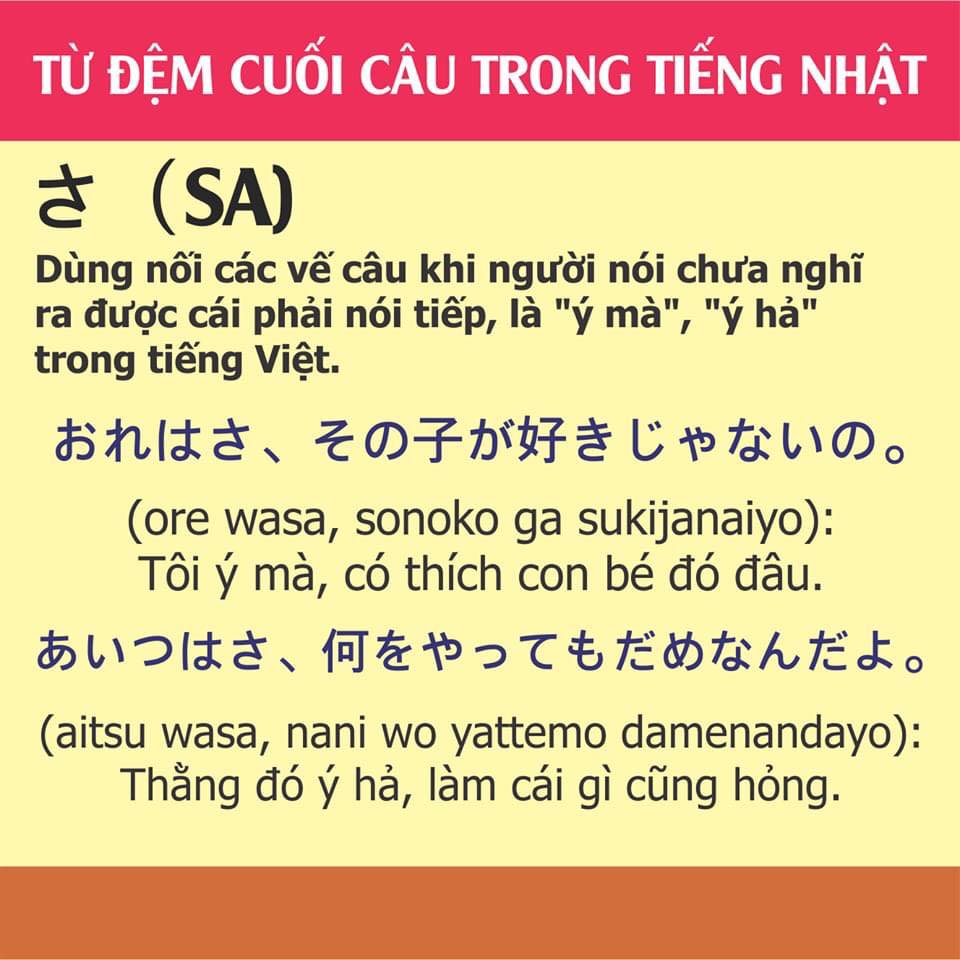
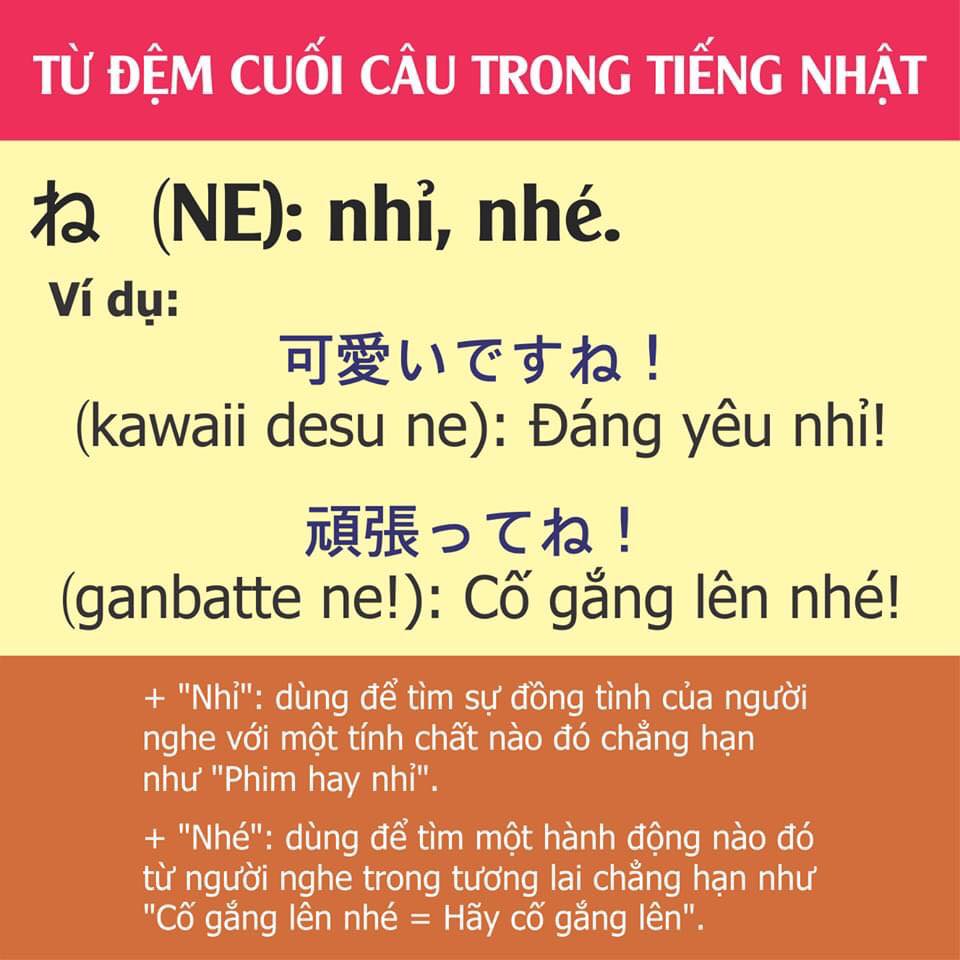
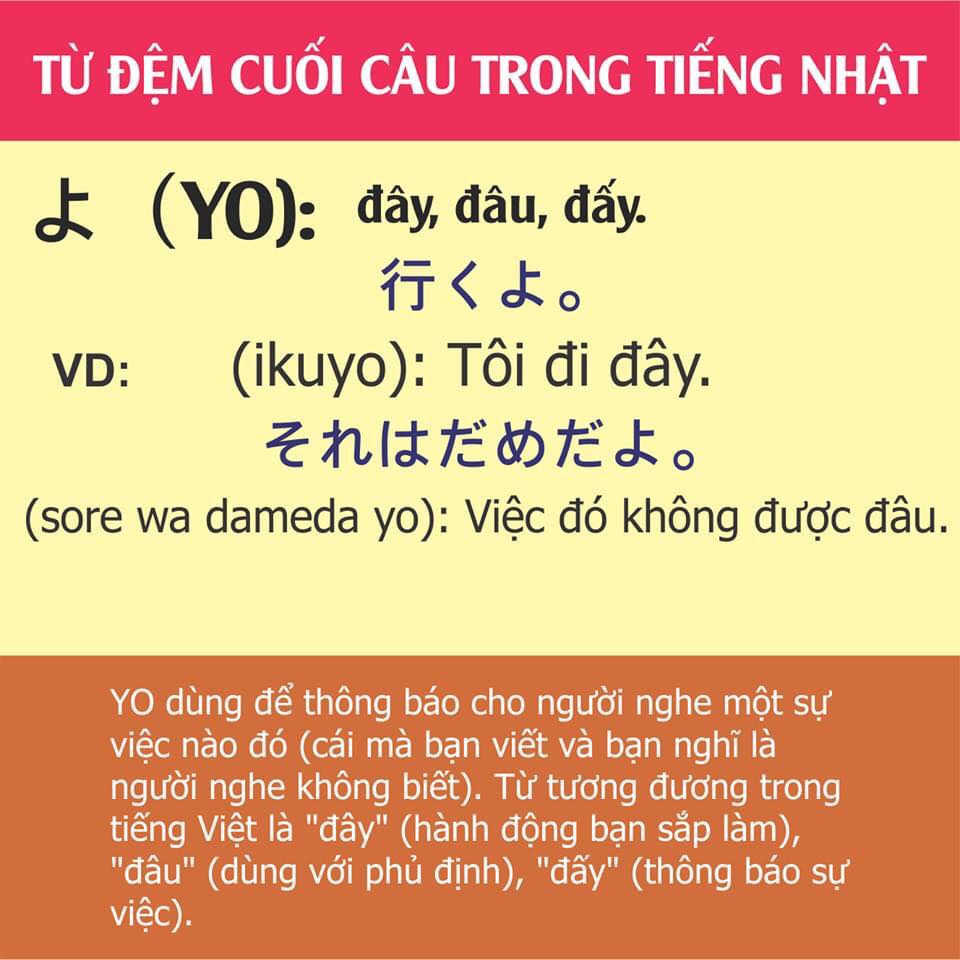
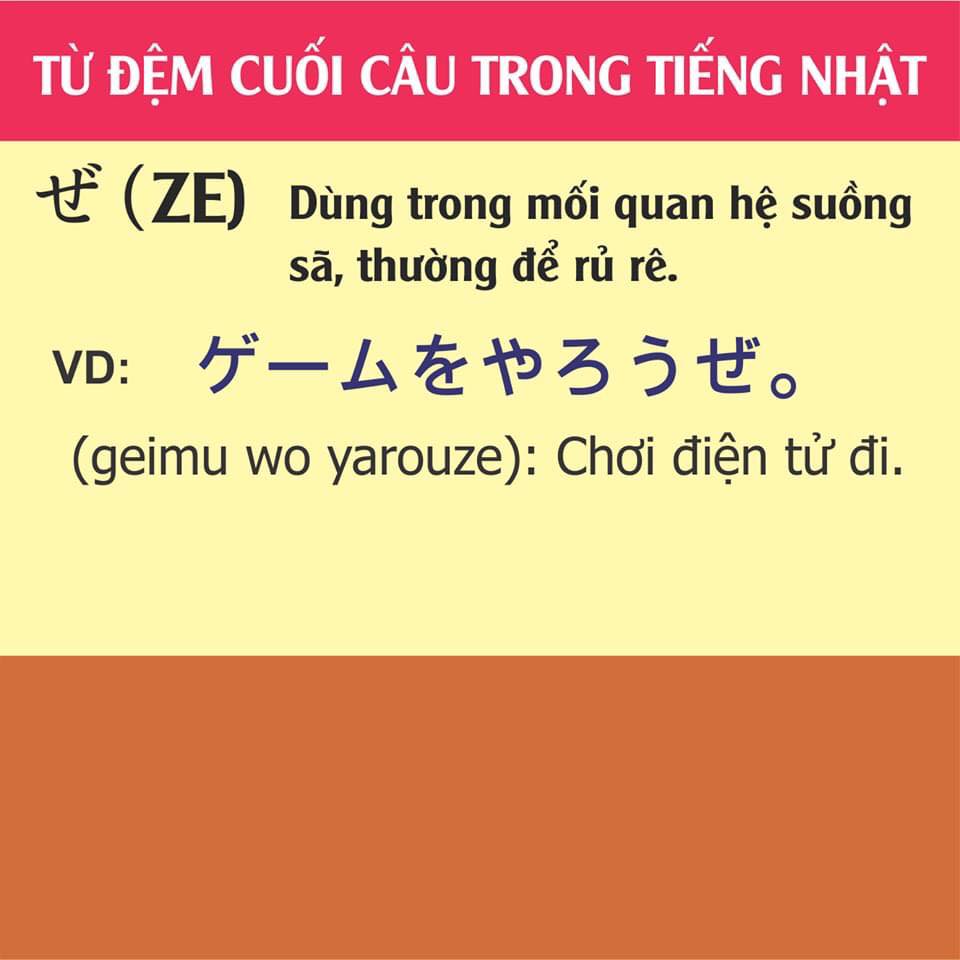
1. ね (NE): isn't it, will you.
2. よ (YO): you know, I tell you.
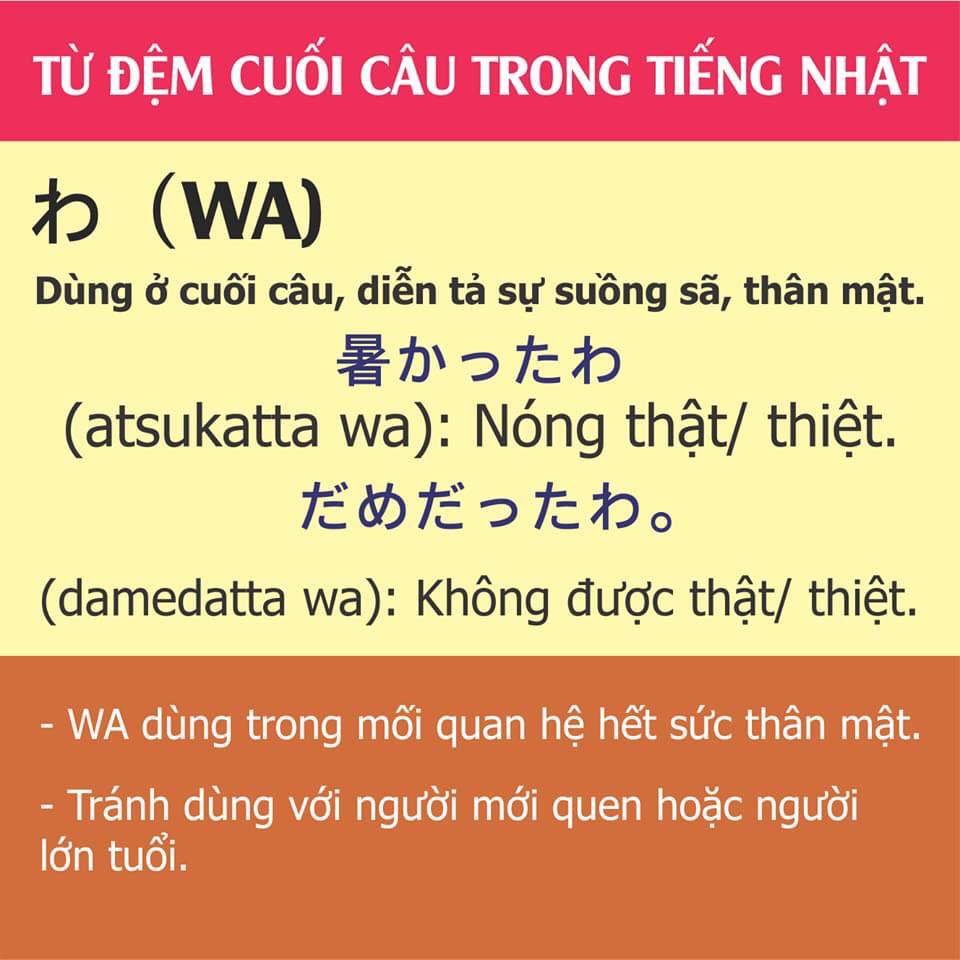
3. わ (WA): Used at the end of a sentence to sound casual and familiar.
4. さ (SA): Used to link parts of a sentence when the speaker has not yet thought what to say next; it is the “you know” or “I mean” of Vietnamese.
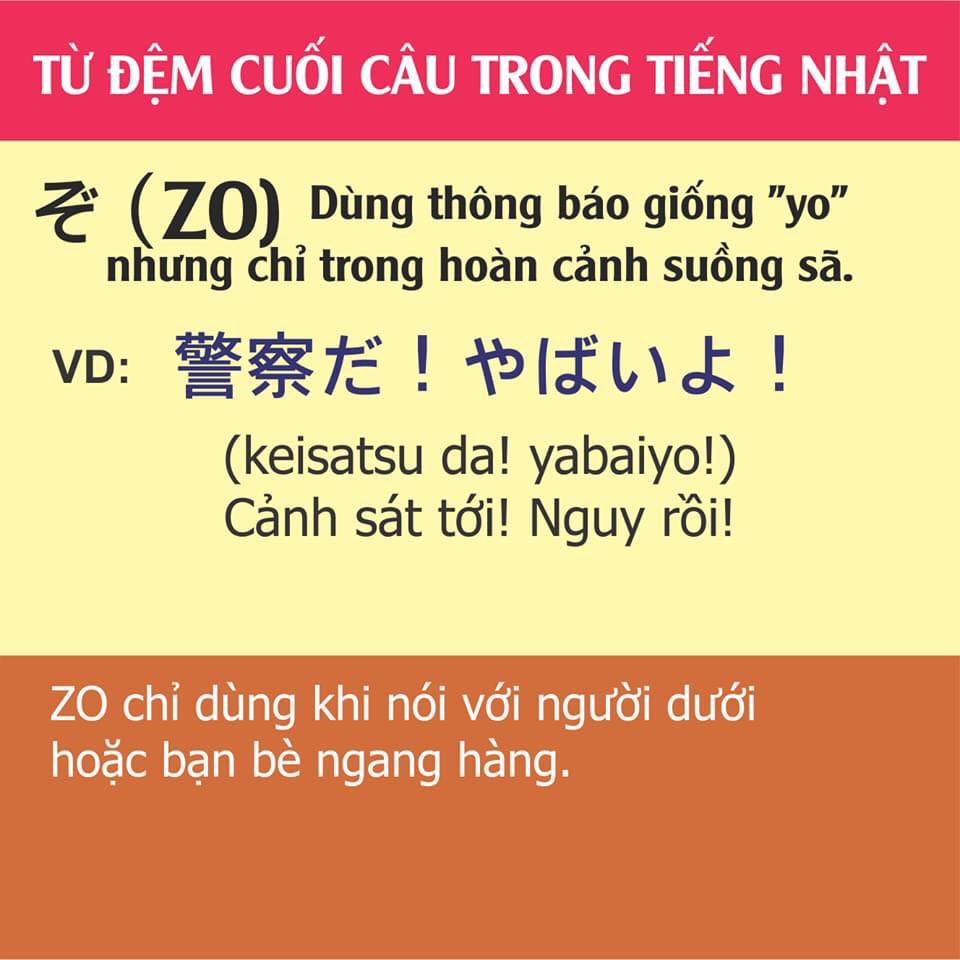
5. ぞ (ZO): Used to tell someone something, like “yo”, but only in casual company.
6. ぜ (ZE): Used between people on casual terms, usually to invite someone along.
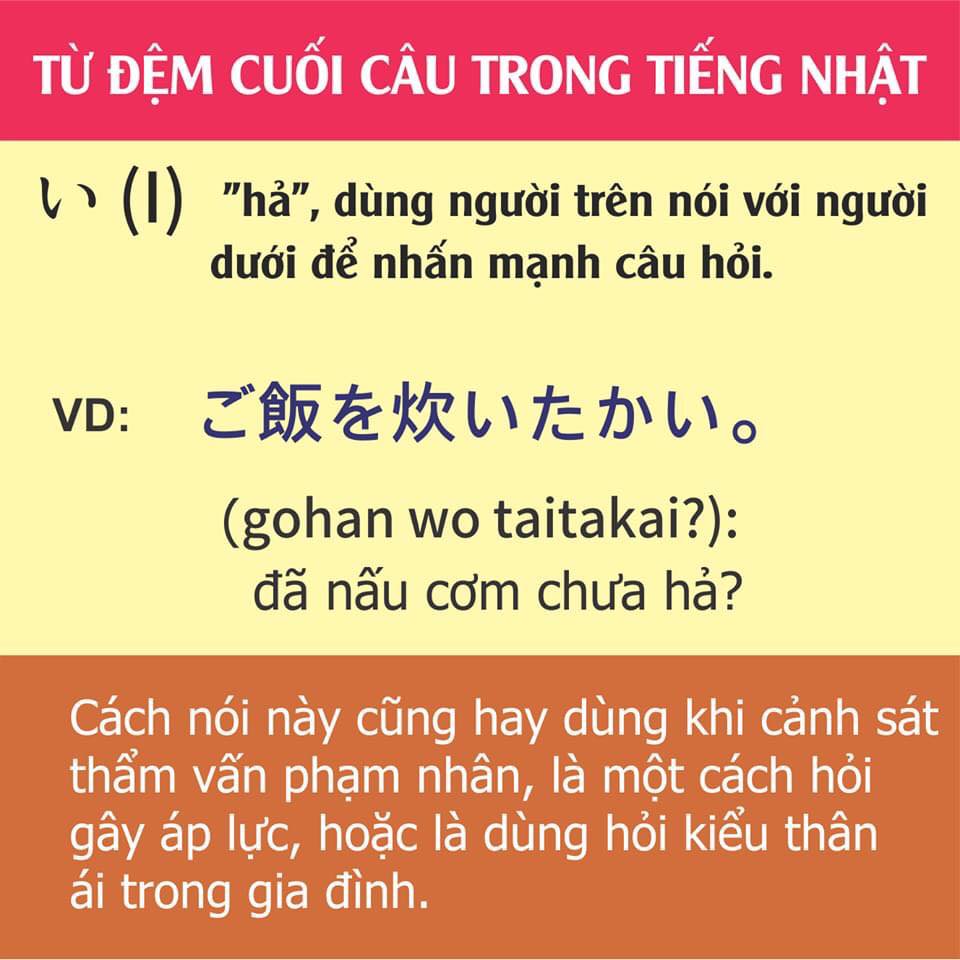
7. い (I): “eh”, used by someone above to someone below to press a question.
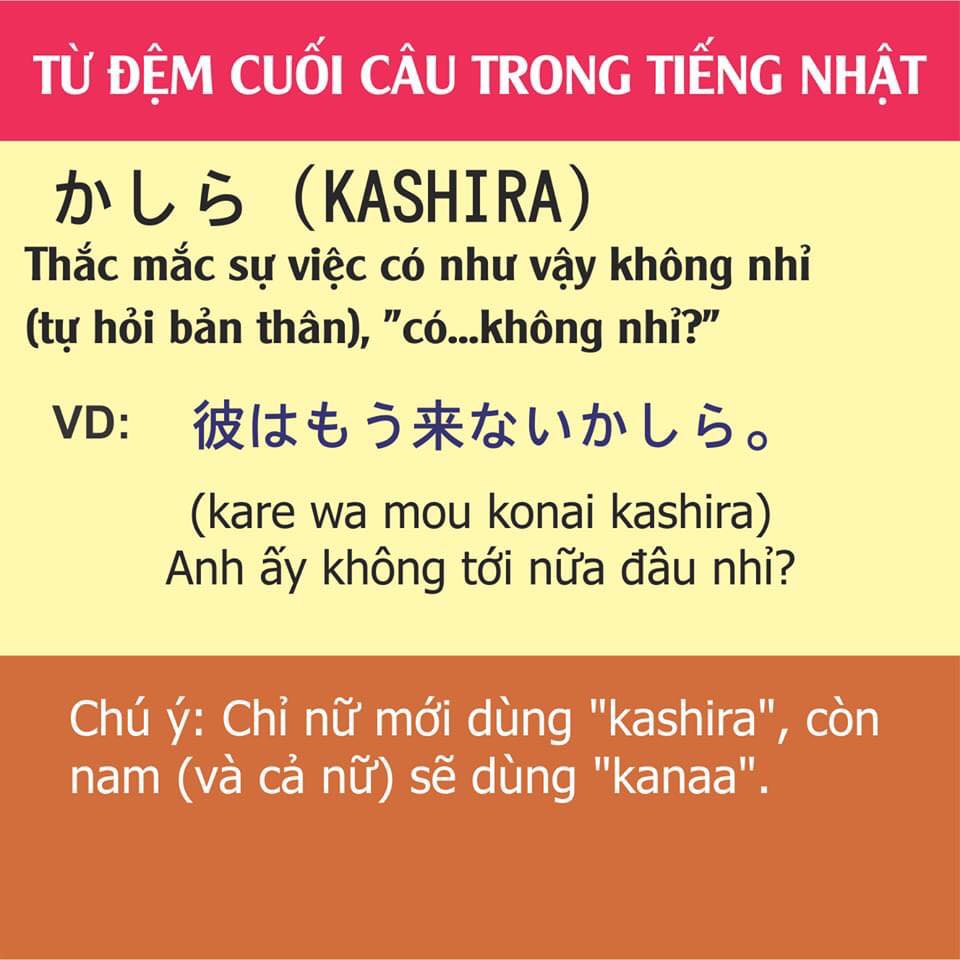
8. かしら (KASHIRA): Wondering whether something is so (asking yourself), “I wonder whether…?”
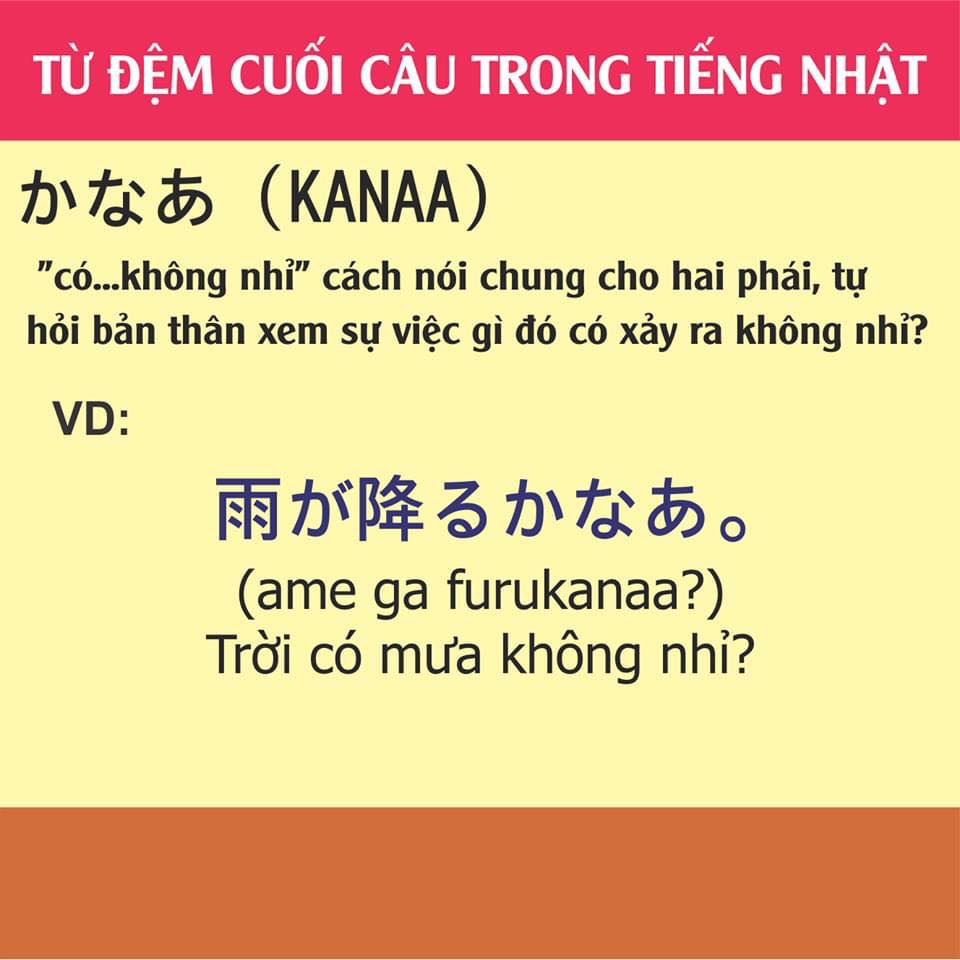
9. かなあ (KANAA): “I wonder whether…”, used by men and women alike, asking yourself whether something will happen.
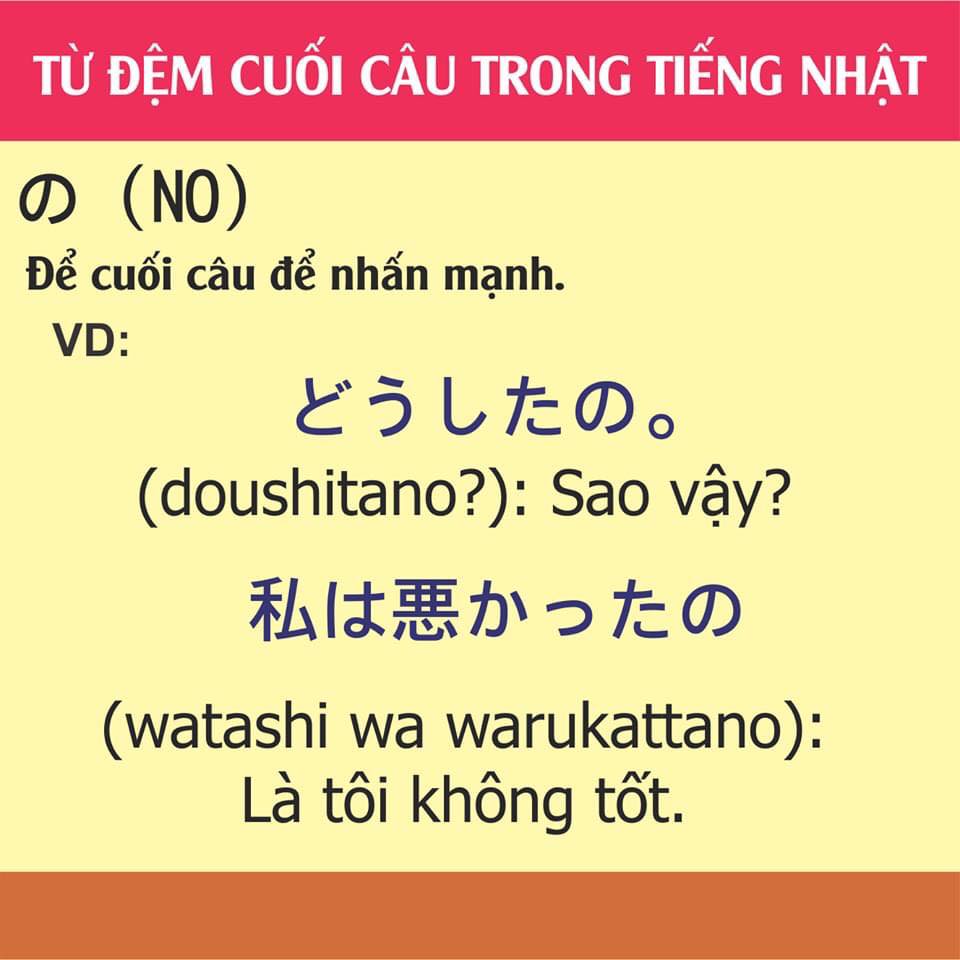
10. の (NO): Put at the end of a sentence for emphasis.
See also:
Common Japanese Forms and Documents
Common Antonym Verbs in Japanese Collected