30 Pairs of Look-alike Kanji That Are Easy to Confuse: Part 1
Translated from the Vietnamese original. View the original.
30 pairs of look-alike kanji that are easy to confuse: Part 1
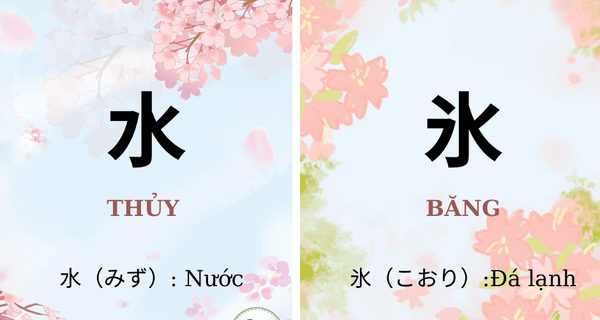
1. 水 (water) and 氷 (ice)
氷 (ice) has an extra dot stroke on the left component, while 水 (water) does not.
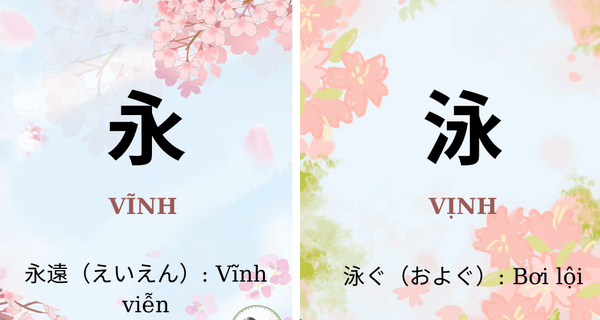
2. 永 (eternity) and 泳 (swim)
泳 (swim) means to swim and is related to water, so it has the extra water radical (氵) on the left, while 永 (eternity) does not.
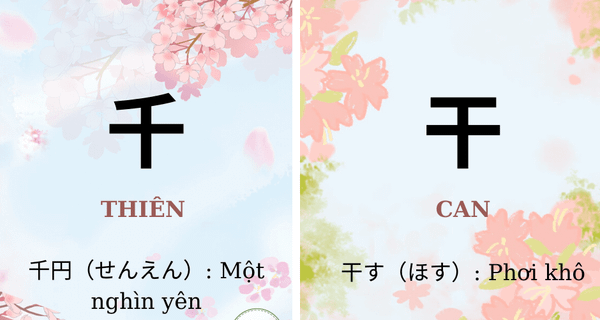
3. 千 (thousand) and 干 (dry)
They differ in the top stroke: in 千 (thousand) it slants up to the right, while in 干 (dry) it is horizontal.
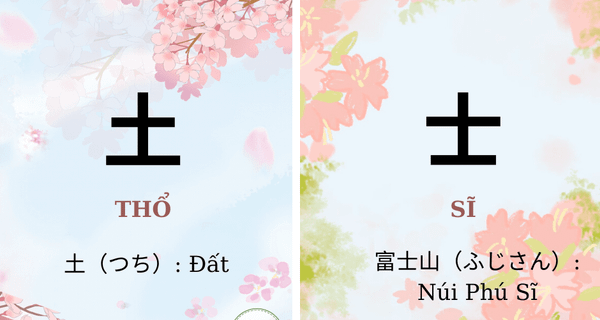
4. 土 (earth) and 士 (samurai)
In 士 (samurai) the first stroke (upper horizontal) is longer than the third (lower horizontal), while in 土 (earth) the first stroke is shorter than the third.
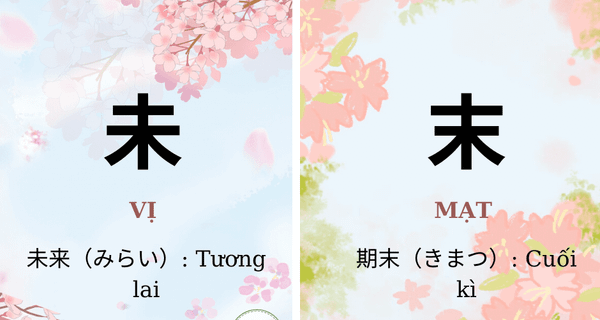
5. 未 (not yet) and 末 (end)
In 未 (not yet) the upper horizontal stroke is shorter than the lower one, while in 末 (end) the upper stroke is longer than the lower one.
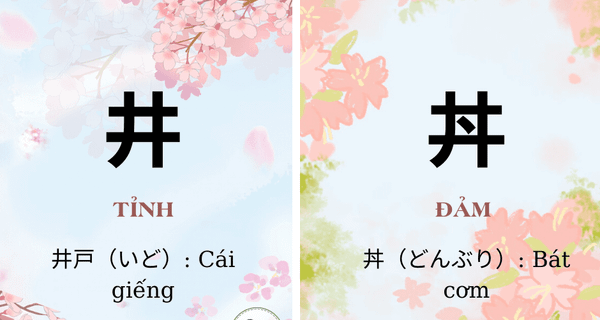
6. 井 (well) and 丼 (bowl)
井 (well) has 4 strokes; 丼 (bowl) has an extra 丶 (dot) stroke in the middle.
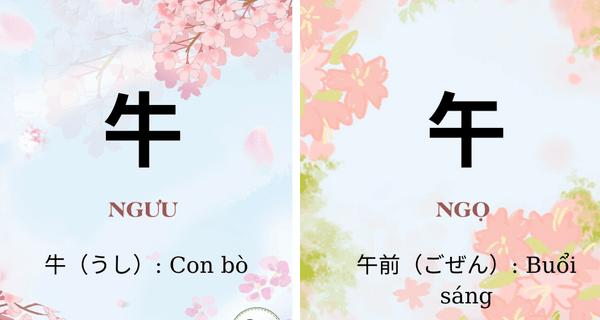
7. 牛 (cow) and 午 (noon)
牛 (cow) has a stroke sticking up at the top, while 午 (noon) does not.
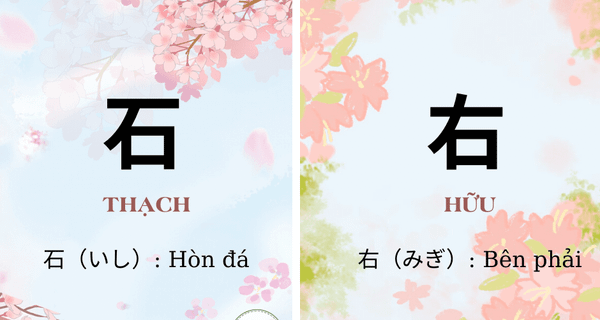
8. 石 (stone) and 右 (right)
右 (right) has a stroke sticking up at the top, while 石 (stone) does not.
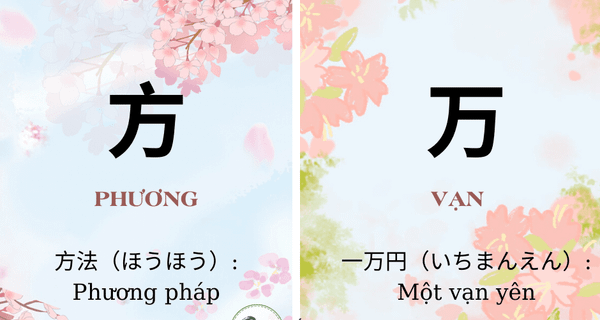
9. 方 (direction) and 万 (ten thousand)
方 (direction) has a dot stroke at the top, while 万 (ten thousand) does not.
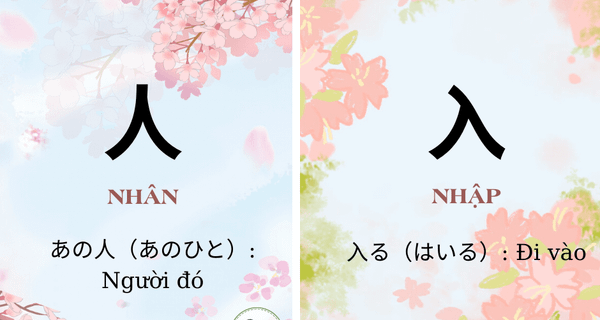
10. 人 (person) and 入 (enter)
In 入 (enter) the right stroke slants to the left and the left stroke is written leaning on it. In 人 (person) the left stroke is written first and the right stroke second.
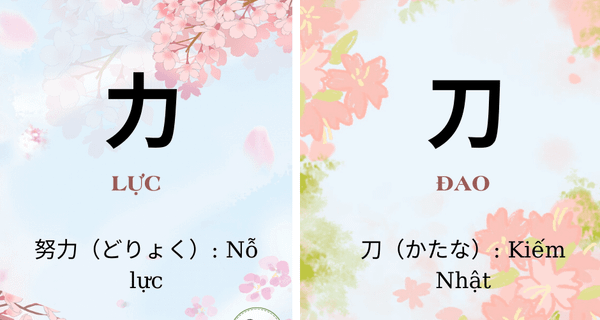
11. 力 (power) and 刀 (sword)
力 (power) is written like a rigid 力 with a stroke extending upward; 刀 (sword) does not have it.
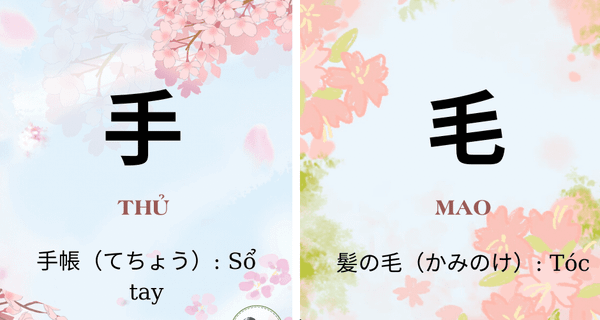
12. 手 (hand) and 毛 (hair)
In 毛 (hair) all three strokes slant up to the right and there is a hook curving to the right at the bottom. In 手 (hand) only the first stroke slants up to the right and there is a small hook at the bottom.
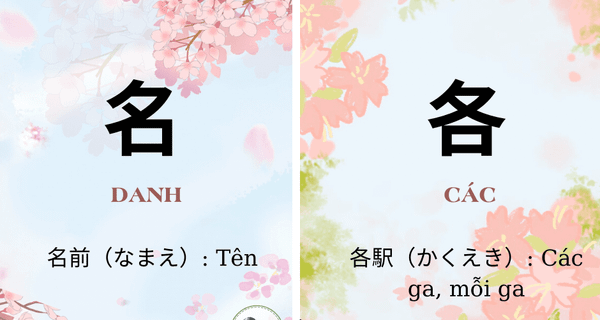
13. 名 (name) and 各 (each)
名 (name) does not have the bottom stroke extending to the right like 各 (each)
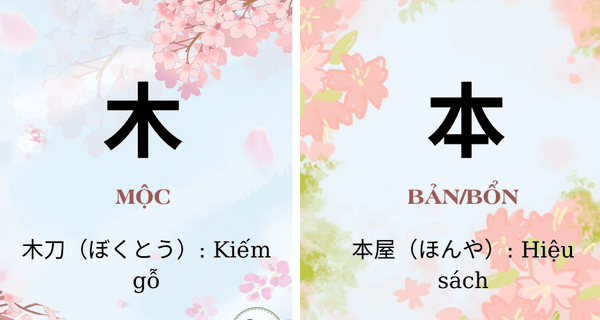
14. 木 (tree) and 本 (book/origin)
本 (book/origin) has a horizontal stroke at the bottom, while 木 (tree) does not.
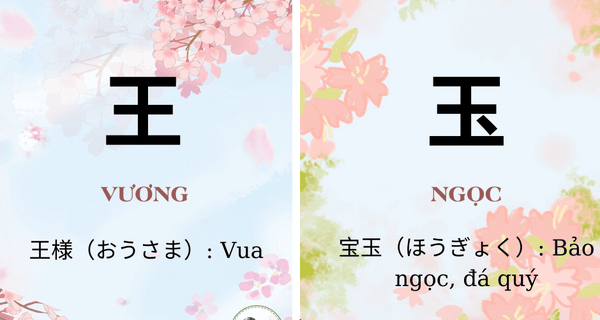
15. 王 (king) and 玉 (jewel)
玉 (jewel) has a dot stroke 丶 inside, while 王 (king) does not.
See also:
80 N5 Kanji for Beginners PDF
30 Pairs of Look-alike Kanji That Are Easy to Confuse: Part 2